Thursday, January 22, 2015

Leveling Up Your Testing Skills

Recently I gave a talk intended to be a quick survey of some of the core areas of testing.  I certainly didn't hit everything, but meant to give people tools to go exploring on their own.  I used a text editor for my presentation, because not everything needs power point.  I thought it might be useful to others so I am recreating it here.  I have done some minor modifications, removing things that only made sense in context of a performance.  I also added a few things based upon the discussion during the presentation.

 ----- Page 1

Survey:

Who has heard about AST?

How many of you have read or even skimmed a testing book in the last year?

How many of you have read a white paper?

How many of you have written ANY bugs outside of professional obligations (your job, school, etc.)?

Has anyone tried to formally QA an article?

How many of you have heard about the “No Tester” movement?

How many of you have heard about ISO 29119?

 ----- Page 2

Purpose:

My purpose is not to teach you facts about testing, even if some of that happens, but rather to teach you what questions you didn’t know that you should even ask and show you places you didn’t know to look.

NOTE: I know I cite myself several times, and while there are other sources, few are as narrowly focused to the strategies I am going to talk about..

 ----- Page 3

Do you know the different ‘schools’ of testing?

Four Schools of Testing*: www.testingeducation.org/conference/wtst_pettichord_FSofST2.pdf


Analytical School - Code Coverage, Unit Testing


Factory School - Metrics, Traceability


Context-Driven School: Exploratory, Multidisciplinary based upon context


Quality Assurance School: Protect user, Gatekeeper, Process-Oriented

* [Edit: Since this presentation, I have discovered an updated model including a 5th school, Agile.  See https://www.prismnet.com/~wazmo/papers/four_schools.pdf)
 ----- Page 4

I’m mostly going to speak from the CDT point of view…

(Aside: While I appreciate CDT’s philosophy, be aware that if you approach the community online, some people participating in CDT’s development tend to be passionate/challenging/aggressive and some are very interested in defining words.  Even if you are not interested in that, CDT is still worth looking into, just figure out who you find value from and whom you don't get value from.)
  
 ----- Page 5


Two of the largest “CDT“ classes:

BBST: http://bbst.info/ ; http://www.testingeducation.org/BBST/ ; http://www.associationforsoftwaretesting.org/training/courses/ ; http://altom.training/bbst-foundations/

RST: http://www.satisfice.com/rst.pdf

(Both have free portions, BBST includes all the lectures for free)
  
 ----- Page 6-8


Models and Heuristics:

What are they? Read my work: Words of the Week: Heuristic [& Algorithm]: http://about98percentdone.blogspot.com/2013/10/words-of-week-heuristic-algorithm.html

“A Heuristic is an attempt to create a reasonable solution in a reasonable amount of time.  Heuristics are always Algorithmic in that they have a set of steps, even if those steps are not formal.” 

List of Heuristic Mnemonics: http://www.qualityperspectives.ca/resources_mnemonics.html

SFDIPOT - Structure, Function, Data, Integrations, Platform, Operations, Time

HICCUPPSF - History, Image, Comparable Product, Claims, User Expectations, Product, Purpose, Standards and Statutes, Familiar Problems

Heuristic Test Strategy Model: http://www.satisfice.com/tools/htsm.pdf

How do you know when you are right? http://about98percentdone.blogspot.com/2013/11/how-do-you-know-when-you-are-right.html


Models:


Session-Based Test Management: http://www.satisfice.com/sbtm/index.shtml

Thread-Based Test Management: http://www.satisfice.com/blog/archives/503

Tours: http://www.developsense.com/blog/2009/04/of-testing-tours-and-dashboards
   
 ----- Page 9


Books (just a few):

An Introduction to General Systems Thinking: http://www.amazon.com/exec/obidos/ASIN/0932633498

Exploratory Software Testing: Tips, Tricks, Tours, and Techniques to Guide Test Design: http://www.amazon.com/Exploratory-Software-Testing-Tricks-Techniques/dp/0321636414

Lessons Learned in Software Testing: A Context-Driven Approach: http://www.amazon.com/Lessons-Learned-Software-Testing-Context-Driven/dp/0471081124/

Agile Testing: A Practical Guide for Testers and Agile Teams: http://www.amazon.com/Agile-Testing-Practical-Guide-Testers/dp/0321534468/
 
 ----- Page 10


Self-based learning

Go find a testing job for the weekends like:
http://www.utest.com/
http://sourceforge.net/p/forge/helpwanted/testers/
http://www.guru.com/d/jobs/
http://weekendtesting.com/america
   
 ----- Page 11


Where are you going?

http://blog.red-gate.com/wp-content/uploads/2014/02/Test-Engineering-Skills-v3.pdf

(Go look at this guy, it is an interesting list of skills)
   
 ----- Page 12 & 13 

Experts and active members of the community:

There are different people who have different expertise’s that are worth reading.  Not everyone does much automated testing, while other people are more interested in coaching or test design.  Look at where your strengths are and find people who will be able to supplement them.  Some of these people may in fact oppose my own views, but that too can be valuable.  Debate helps you understand your own point of view.  Here is an example or two….

James Bach* – Testing is an Intellectual Inquiry
James Christie* — Consultant, Professional Auditor and Tester, Started entire ISO 29119 discussion
Jon Bach* — Session-Based Test Management (with his brother)
Michael Bolton — Testing vs Checking
Huib Schoots — Dutch Testing Coach
Scott Barber — Load Test Guru
Rex Black — Proponent of Factory School of Testing***
Harry Robinson — Model Based Testing
Justin Rohrman* — Active in community, board member of AST
Robert Sabourin** — Author of I Am Bug (pictures by his 12 year old daughter)
Jerry Weinberg  — Systems thinking, consulting, author
Karen N. Johnson* – Professional Tester’s Manifesto
Fiona Charles* — Author, Speaker
Matt Heusser* — Founder of Miagi-Do
Cem Kaner — Originator of CDT, BBST, Legal concerns around testing
Alan Page — (Former?) Microsoft Test Architect


* I met these folks at CAST, and you too can meet these sorts of folks at CAST.
** I met Rob at WHOSE, I enjoyed his writing at WHOSE but he tends to be more academic in my experience.
*** [edit:  Since publication my understand of Rex Black's ideas has evolved. Rex specifically rejects the concept of Schools and, as best I understand would prefer I say he's a Proponent of the Strategy of Factory Style Testing in some contexts.  I leave the original work as stands for historical reasons.]

(Some of these people are accessible to talk with, some only speak through their work, some through conferences…)
    
 ----- Page 14

An Exemplar (with more details): 

Doug Hoffman

http://www.softwarequalitymethods.com/h-papers.html
(pay attention to the dates of the papers, some have updated versions)

He has written exhaustively around automation and testing.  While that isn’t the only work he’s done, you will get a good idea of the depths you can go in with automation.  On the other hand, if you want to learn to code, Doug is probably not the man to visit.  He’s interested in theory behind automation.  He was one of the minds behind the ideas High Volume Test Automation and Exploratory Automation.

I wouldn’t go to Doug to find out the latest idea behind Selenium.  I would go look at Doug’s work to understand what sort of automation techniques might make sense to apply to a problem.
    
 ----- Page 15

Questions you need to ask (that I can’t answer):

How much time am I willing to dedicate to learning?
What sort of things do I want to learn?
How varied do I like my studying?

Is this a job or a profession?

Do you want to do something that matters?

Are you okay with having 10 years of experience that really only add up to 1 year of valuable experience?

 ----- Page 15-17

Questions you need to ask (that I can give hints on):

Where can I learn?
 - Blogs
 - BBST/RST and other classes (LST is another CDT class, RBCS is from the factory school)
 - Books
 - Co-workers (particularly challenges)
 - Conferences (CAST - https://www.youtube.com/playlist?list=PLQB4l9iafcelXpJnK6IyDsoFeEb1icqrl , Code Camp, Star West, Star East, Agile testing days, GTAC - https://developers.google.com/google-test-automation-conference/2014/stream , etc. ; Often recorded on Youtube)
 - White papers: http://about98percentdone.blogspot.com/2015/01/white-papers-and-who-owns-your-education.html

What should I learn?
 - Start by glancing at the foundations class.  See how much of it you know already.
 - Read blogs about what interests you.
        - Look up the people I talked about (I suggest Googling "<Name> Testing”.  Almost all of them have blogs).
        - Look at the top blogs and see what they have to say: http://www.testbuffet.com/lists/top_114_software_testing_blogs_2014/page/1/
        - If those methods don’t work, try looking at the fire hose and see if there is an interesting topic: http://www.testingreferences.com/testingnews.php
 - Start your own blog and learn to write; here is mine: http://about98percentdone.blogspot.com
       - Feeling shy?  Why not start by writing comments.
 - Pick up one book.  Read it.  Don’t like the ones I listed?  Check out this extensive list: http://www.testingreferences.com/software_testing_bookstore.php
   - Write a review on your blog
 - QA a news article.  Write up bugs on failed assumptions.
      - http://about98percentdone.blogspot.com/2013/09/testing-babies-for-learning.html

Learn about your interests AND figure out how much you are gaining.  If your energy wanes, move to a different topic or take a break.

What else can I do?

- Figure out what matters and work on that: http://about98percentdone.blogspot.com/2014/10/noise-to-signal-attempt-to.html
- Don’t keep working in the same position for too long.  Changing jobs is healthy.
- If you aren’t much of a reader, but rather audio or video, try some of these: https://flowoftesting.wordpress.com/2014/09/02/podcasts-and-videos-for-testers/
- Learn from the history of testing: http://www.testingreferences.com/testinghistory.php
- Find some heroes and some villains and learn from them (villains will help you clarify your own views): http://about98percentdone.blogspot.com/2014/01/heroes-and-villains.html

Have fun.  If this doesn’t sound fun at all, go find something that does, even if it is a different career.

Thursday, January 8, 2015

White Papers and Who Owns Your Education?

Let me start out by point you to this rather complex white paper, A Large Scale Study of Programming Languages and Code Quality in Github.  It inspired me to write a little about reading white papers and why they matter.  In trying to read or perhaps decipher, it made me feel a little stupid.  What, never heard of the Chi-Square test?  How about CramĂ©r's-V?  Does that make you feel like, "Then why are you reading this?  Don't you feel dumb?  You should go back to yahoo news or wherever you came from."  That is the voice in the back of my head, and yes, reading these sorts of papers certainly can make me feel dumb.  Fortunately, I know better.  Even if I am not a accomplished statistician, I'm sure there could be bits of data that are worth gathering.  I personally believe we should try to improve our development* in whatever ways possible, and this study is trying to do so by providing a very high level view of computer languages.  Even though it is not particularly about finding bugs or testing, it does give some insights into bugs and their relationship to languages.
* Pun intended

Let me start with a word of warning before we deep dive into the analysis of this whitepaper.
"One should not overestimate the impact of language on defects.  While these relationships [in the chart in the study] are statistically significant, the effects are quite small.... activity [commits] in a project accounts for the majority of explained deviance [difference in bug rates]... the next closest predictor which accounts for less than one percent of the total deviance, is language."
So while language is important, code churn is more important.  That however does not end the story.  There are still important pieces to pickup.  I am going to leave the definitions of what constitutes a particular category, such as a 'functional language' to the actual paper, which you can look up if it is of interest.  Perhaps you know the language you are working with, so considering a list of languages might be of interest.
"...a greater number of defect fixes... include C, C++, JavaScript, Objective-C, Php, Python. ... Closure, Haskell, Ruby, Scala, and TypeScript... are less likely than average to result in defect fixing commits."
For most companies this is bad news.  Few people write Scala or Haskell on a day to day basis.  Worse yet, I wonder if the experience level of those who write in such languages is greater than average, something the study could not control for.  From what I could tell, they didn't even consider looking at the length of time a user's name was associated to a repository as a proxy for experience.  Since experience was not considered, perhaps the broader categories such as 'functional languages' is more helpful.
"...strongly typed languages are less error prone than average while weakly typed languages are more error prone than average."
"This is strong evidence that functional static languages are less error prone than functional dynamic languages..."
"Functional languages have a smaller relationship to defects than either procedural or scripting languages."
So if you are using a strongly typed language you are better off and if you are using a functional language you are better off.  Does it matter what sort of application you are working on?
"...there is only a weak relationship between domain and language class."
Oh, well I guess then it doesn't really matter what you do, it is how you use the language.  Are there classes of defects that matter?
"Languages matters more for specific categories than it does for defects overall."
"In fact, we noticed 28.89% of all the memory errors in Java come from a memory leak.  In terms of effect size, language has a larger impact on memory defects than all other cause categories."
Interestingly, even though Java has managed memory, it seemed to suffer more from memory problems than most other memory managed languages.  This could be because of the applications considered, such as ellasticsearch, a Java based search engine compared to SparkleShare, a C# file sync tool.  I couldn't find anything language related that seemed obvious for Java's problems with memory compared to C#.  On the other hand Java is way better than any unmanaged memory languages.
"Go has a lot more concurrency bugs related to race conditions due to its race condition detect tool..."
"TypeScript is intended to be used as a static, strongly typed language... However in practice, we noticed developers often [50%]... use any type, a catch-all union type, thus makes TypeScript dynamic and weak."
In looking at what may be wrong with this study, I found it interesting that tool support maybe a reason for differences between languages.  Basically, because the language is only as good as the people who use it and the tools around it, it could be the study gives a false sense of knowledge.  It could be that the use cases are so complex, that this one study and method will not get us much in regards to languages and when to use them.  To be fair, the researchers noted other studies, with their own limitations and similarities.  Confirmatory studies are useful, but humanity is really complex and their study wasn't completely confirmatory.  This is a sort of social-science meets well recorded data.  Git has perfectly recorded data, but even with it, it is hard to know because there is so much data.  There was a 'study' done a few years ago regarding swearing and checkins in github.  While amusing, it also is one more piece of data.  Keeping in mind the warning I started with at the beginning of the article, this was the authors' conclusions
"The data indicates functional languages are better than procedural languages; it suggests that strong typing is better than weak typing; that static typing is better than dynamic; and that managed memory usage is better than unmanaged. Further, that the defect proneness of languages in general is not associated with software domains. Also, languages are more related to individual bug categories than bugs overall."
For the average tester, is there something to learn here?  I think the primary thing is that code churn has more to do with defects than anything else.  Fighting over the tool to use after a project is started is probably not worth it, unless you are rebuilding from scratch.  Keep in mind what else comes along with the language and what value that gives you.  If race conditions matter, then Go is likely a winner.  Just because you have managed memory does not mean you can't have memory issues.  Functional languages like SQL tend to have less defects, possibly because state is less of an issue.  Finally, no matter what language you are using and no matter what you are doing, you will have bugs.  What else did you pick up from the white paper?

Wait, wait... don't drop the curtains yet.

In violation of the end an article with a question to cause action, I want to give pause in considering that perhaps this subject is not to your liking.  Well why not read up on all the data browsers leak out.  It will give you a good feel for just how complicated the simple underlying HTTP connections are.  Maybe you want to learn how to model learning, in which case the Dreyfus Model of Skill Acquisition might be up your alley.  Or perhaps you want something more on testing, such as the pair wise testing white paper.  Or perhaps the famous session based test management paper.  Perhaps none of the ideas I've suggested have struck your fancy.  Cem Kaner developed hundreds of links in his citations for one of his classes, many of which are white papers.  And that is to say nothing of rfcs, a Request for Comments, which helps define standards we all use.  Even books like The Reflective Practitioner, which I am slowly reading through, but has been well analyzed in Wikipedia.

Which brings me to the problem with Wikipedia and blogs like mine that analyze content.  People like myself pull out the conclusions for you and so you skip reading the white paper.  Do you really want to leave your entire education up to those who form conclusions for you?  Let's me be honest, most of you won't click half the links I provided and just as many won't seriously read the cited white paper.  It is not unusual for a large percentage of people not even to read this far, complaining "TL/DR".  "So what?", you, the wise reader who has made it this far might ask.  In my book review of An Introduction to General System’s Thinking I tried to pull out some of my favorite little pieces, some flavour, which was not directly related to the review.  Some of Gerald Weinberg's wisdom will be lost if all you do is read a short summary of his ideas.  Now you say you don't have time, wiki is better than nothing.  Maybe that is true.  I won't argue that you shouldn't use wiki and speed through some of one's education.  Just make sure to occasionally spend time looking at a subject deeply to help deepen your thinking and understanding.  I am sure you might come up with more reasons why you shouldn't, and I won't try to out reason you in your quest to not read deeply.  It is your choice.  I will say it might be hard to do that sort of deep reading, but it will be worth it.

So once again, we are back to the cheesy, end with a question.  Well I won't burden you with that sort of guilt-driven work harder question at the end of this post.  Instead I will give you an offer and a statement.  If anyone leaves a comment with a white paper or rfc for me to read, I will read it and I might even report back on it.  Book suggestions are a dime a dozen and sadly even I have finite amounts of patience for books and a stack of books I want to read, but if you give a recommendation I will at least seriously consider it.  And now for the statement:  I want to gain a deeper understanding of the world, and I will share some of what I learn, but you must do your own investigating as well and I want to say...  Good luck with your own education!

Monday, December 15, 2014

More on No Testers

I sometimes look to see who is reading my articles, and if the incoming link looks interesting, I try to see if I can find the blog it came from, maybe even comment on it.  I particularly wanted to see if anyone had comments on my latest blog about No Testers.  Well I did that today.  I went to look at a Russian article (in Russian), and found a comment by Maxim Shulga saying (translated by Google):

Detailed and very adequate answer to the same question to my http: //about98percentdone.blog ... The only pity is that uncomfortable read: white on black. Burns my eyes :)

Now normally I would just reply to such a comment by filling out the form or using my gmail credentials and writing back.  I might say something silly about how I know not everyone likes the black on white style, as Jeff Atwood pointed out years ago.

While Google translate did translate the article, it didn't translate the comments nor the method to reply to a comment... using some developer tools I was able to establish this was from Disqus.  I am now going to chronicle my efforts to get an account and demonstrate how usability might have benefited from a tester, not to mention a bug tracking system.  Before I go on, I want to say I have no business relation with Disqus or any other discussion or forum/blog related software outside of this blog.  I am not trying to pick on them, it just happens I was trying to get something done and they are blocking me.  They also happen to have no testers, or at least no one with a label of "QA" or "Tester" or anything outside of 'engineering'.  This just happens to be an interesting example which relates to my previous post. I did not intentionally go looking for a company that has no testers and only discovered after I started writing this blog post that they have no testers.  I have contacted them about the issues I have noted here and none of the issues relate directly to security or should go unpublished for ethics reasons.

What I Found


Item 1:

Disqus did not give me English versions of their UI for replying even though my browser should be requesting English.  I tried several browsers, including IE which I checked to see it was set to en-US.  I am not sure if this could be detected via any sort of metrics to figure out they should be looking at the browser language rather than some user/blog setting.  To me this is the sort of choice that happens when you don't think long and hard about localization.  But perhaps they know and plan on changing it or maybe they think this is the right choice.

Item 2 & 3:

So I go to https://disqus.com/ and click sign up.  I am asked for a email AND a username.  I don't know what the username is used for in this context and there is no useful description or even an icon to click.  So I enter an email, username I enter JCD and a password and get told "Username already exists."  So I try JC-D.  Nope, "Letters and numbers only please."  Okay, what about JÇD.  It is all ASCII characters but I just get "Letters and numbers only please."  In fact, it thinks all sorts of things are not letters or numbers in their view but which I would consider letters.  I didn't bother with much Unicode but I imagine it would have the same sorts of issues.  Maybe this is intentional, but their error is not meaningful to me.  Worse yet, it excludes many people with names that are not just alpha characters.  My name has a hyphen in it, thus the JC-D.  The hyphen was excluded, excluding me using my real name.  Granted the math models would say I don't count as few people have hyphenated names.  Maybe I shouldn't care, maybe the name doesn't matter, but the username's usage is not clearly explained.  However, not including Markus Gärtner because his name has a non-English character seems really wrong.

Item 4:

I thought for a moment to use their gmail integration.  I have used it for Khan's Academy to log in and it worked fine.  So I tried but it looked like they wanted me to have a Google+ account, which I intentionally don't have.  I am a bit odd, wanting both privacy and a voice.  I don't like giving away personal details and being tracked, even if I have professional opinions that I wish to voice.  My professional and personal lives mix, but only a little.  So that was a no-go for me.  Worse yet, I get an warning saying that OpenID2, the method Disqus uses to sign up, will being no longer supported early next year (April I believe).  Clearly they have some updating to do.

Item 5:

I considered using a fake email address, but their terms of service were not on their sign up page.  In fact, most of the links on their page went away on the sign up page.  Maybe that is intentional.  Maybe it was A/B tested.  If so, awesome, but for me it was less than optimal.  I admit to not being the main use case, and perhaps that is one problem with testers.  We are not equal to users.

Item 6:

I go to report these issues and the best I can find is a contact support.  Not saying support is a bad place to start, but the form of input gives me about 3 sentences and a scroll bar.  If I wanted to tweet the error, that might work, but I had detailed points to give.  Only someone who is concerned with the customer would notice this, but I, a potential customer did.

Analysis of Why the Issues Exist


I suppose the question is, how do we capture this sort of data or if we care.  Maybe annoying your users is okay when you are a free product.  Maybe alienating users is fine when your metrics show few users try to use Unicode.  Perhaps that is what data scientists are useful for, deciding which problems matter?  Maybe having a functional tester would notice these issues and bring them up?  Having the customer deal with the problems until you figure out if it is a good idea is not an uncommon model, particularly if you own the market.  But keep in mind I never did get to make that comment.  Speaking in psychological terms, even with professional distancing, I will have a more negative view of their product and it will take effort on their part to turn me around.  Even if they magically changed it all tomorrow a potential customer like me might be long gone.  Perhaps with a billion users, it doesn't matter.

While I personally don't feel this way, but maybe the Disqus team is not the right team, which is the argument made for hiring 'the right team' that I have heard from the no tester camp.  If they were, I'd not be writing this post, with so many issues.  I think the language used by the no-tester side is unclear what the 'right team' is, and perhaps what they think testers do.  I am not sure that a mythical right team, with or without testers will ever produce bug-free code, but there are certainly good and bad team mixtures.  I feel that it is rather more difficult to evaluate their team dynamics having never met any of them.

Perhaps they are 'the right team', and I am just the wrong customer?  That is the other half of this particular no tester argument.  That testers are not like customers, so use customers.  As a customer who thinks like a tester, maybe I'm not representative?  Then again, if I pull out my heuristics, I can compare this to other products that don't require you to sign up at all to write a comment.  That may not be a complete defense in comparing myself to a real customer, but it certainly gives credence to these issues.

Finally, it could be they do have QA/Testers but they were renamed to some other title.  That just made it harder for me to figure out if they have testing and if what was built was what was intended.  These are design choices, but it is unclear if there was anyone questioning these design choices. Without someone in that role, the 'get it done' mentality comes into play, at least in some organizations.  Perhaps that happened here.

I am sure the reality of Disqus is way more complex than I have presented it, but I am an outsider.  I welcome any feedback from the company and will update this accordingly.  I also was not looking for this example case.  I was not planning on posting any more this year.  It just showed up and I thought it was interesting.  I'd love to hear from those who feel no testers is an appropriate choice and how they would interpret this.

To Maxim Shulga, I am sorry you don't like my black background with white text.  I will take your view under advisement if I ever try to re-theme this blog.  I hope at least the content is useful.  And next time, just leave a comment on my blog... this reply to your comment took way too long to write. :)

Friday, December 12, 2014

Thinking about No Testers

In attempting to hear out the various viewpoints of those whom subscribe to the idea that Agile should move towards removing the role of tester.  I have yet to see anyone who actually suggested eliminating testing completely, if that is even possible.  So let us unbox this idea and examine it, with as little bias towards keeping my own job as possible.  Here are the rough set of arguments I have seen/heard in TL/DR (Too long, didn't read) form:
  • Limited deploys (to say .01% of the users and deploy to more over time) with data scientists backing it will allow us to get things done faster with more quality.
    • Monitoring makes up for not having testers.
  • Hiring the right team and best developers will make up for the lack of testers.
    • Writing code that "just works" is possible without testing, given loose enough constraints (which leads to the next argument).
  • Since complete testing is impossible, bench testing + unit testing + ... is enough.
  • Quality cannot be tested in.  That is the design/code.
    • Testers make developers lazy.
  • It is just a rename to change the culture so that testers are treated as equals.
    • Testers should be under a dev/team manager, not in a silo.
  • It is a minor role change where testers now work in a more embedded fashion.
  • We hire too many testers who add inefficiencies as we have to wait <N time> before deploying.
    • We only hire testers to do a limit set of activities like security testing.
  • Testers do so many things the name/profession does not mean much of anything.
  • With the web we can deploy every <N time unit>, so if there are bugs we can patch them quickly.
  • As a customer I see those testers as an expensive waste.

That is sure a lot of different reasons, and I'm sure it is not an exhaustive list.  Now I shall enumerate the rough responses I have seen:

  • A little genuine anger and hurt that 'we' are unwanted.
  • A little genuine disgust that 'we' are going through the 80's again.
  • Denial ('this will never work')
  • It can work for some, but probably not all.  (This follows a very CDT 'it depends' point of view)
    • Not everything can easily be instrumented/limited deployed.  For example, I have heard Xbox 360 games cost ~10+k to do an update.
    • In some software, having less bugs is more important than the cost of testing.
  • This is why we need a standard (I never heard this one, but it is an obvious response)
  • Concern about the question of testing as a role vs task.
  • Different customers have different needs they want to fulfill.
  • Good teams create defects too.
  • We need science to back up these claims.
  • Testing should move towards automation to help eliminate the bottlenecks that started this concern.
  • It is very difficult to catch your own mistaken assumptions.
    • If you need someone else to help catch mistakes, why not a specialist?
While I don't have a full set of links I have heard this back and forth viewpoints, but I think it is an interesting subject to consider.  I am going to go through my bulleted list top down, starting with the "no testing" side of the world.  I believe I have seriously considered the limited deployment and letting the tester be the customer in a previous post.  In that same post I noted that at least not all teams can make up for a lack of testers, so again, I think it has been addressed.

Complete Testing is Impossible & Quality Cannot be Tested in


The premise is true, complete testing is in fact impossible, I do agree with that.  The conclusion that hiring testers is not needed is the part I find interesting.  Quality of code and design cannot be tested in is also in interesting statement.  The idea that testers make developers lazy feels very unsubstantiated, with possible correlation-causation issues (and I have seen no studies on the subject), so I am going to leave that part alone for now.

I write software outside of work.  Mostly open source projects, of which I have 5 projects to my name.  Most of them were projects in which I was looking to solve a problem I had and wanted to give to the world.  In more than half of them I wrote no formal tests, no unit tests and to be honest the code quality in some of them is questionable.  There are bugs I know how to work around in some cases, or bugs that never matter to me and thus the quality for me is good enough.  I have had ~10k downloads from my various projects and very few bugs have ever been filed.  Either most people used it and then deleted it or the quality was good enough for them from a free app.  I hired no testers and as the sole dev I was the only one testing the app.  I think this is a +1 for the no tester group, if you work on an open source app for yourself, no tester (maybe) required.  CDT even would agree with this as it does depend.  Context matters.  I am sure other contexts exist, even if I have not seen them.  What I have not seen is specifics around contexts that might require no testers, with the exception of the Microsoft/Google sized companies.

Now can you test code quality in?  If you are about to design the wrong thing and a tester brings that up, did the tester 'test' code quality in?  Well he didn't test any software, the no tester side would say.  Sure, but he did test assumptions, which is often part of testing.  What about the feature the tester notes the competition has that you don't, which was discovered when comparing competitor protect quality?  What if I suppose the dev knows exact what to develop, can the tester add value?  Well I know I have made code suggestions that have gotten a developer thinking.  However, I could have just as easily been an XP developer sitting beside him as he coded rather than a tester.  Well what about TDD?  Is that testing quality in?  If I write tests first, I have to think about my design.  That is testing quality in, but again that is just the developer.  What if the tester and the developer co-design the TDD or the tester recommends additional tests added during development.  Again, this could be a developer, but a tester is often thinking about the problem differently.  So while I think the statement is false, if I look at it from the spirit, I think it might be true in some cases.  There are some really great developers who do think like testers and they could do it.  However, I think that is only some of the developers.  There will always be junior developers and there are always other mind set factors that play in.

 What is in a Name & Quick Deploys?


What's Montague? it is nor hand, nor foot,
Nor arm, nor face, nor any other part
Belonging to a man. O, be some other name!
What's in a name? that which we call a rose
By any other name would smell as sweet;
- Juliet, Romeo and Juliet
Does the fact that we are in a in-group called 'test' and some see developers as an outsider matter?  Visa-versa is probably true too.  In fact, the other day Isaac and I had a small debate about correcting a tester in some very minor minutia about deep mathematical and development theory.  To me, perhaps a developer who was neck deep in building new languages would find such a correction helpful, but a tester who was doing some exploration around the subject didn't need such a correction.  In fact such a correction might make things more confusing to anyone who didn't have a deep understanding of the subject.  I myself am guilty of the insider/outsider mentality.  We all categorize things and use those categories to make choices.  Perhaps renaming us all as human beings would make things better.  If an organization is particularly combative, this might be a useful change.  That being said, there is also a group identity for people who see themselves as testers or QA.  There is a specific field of study around it, and that also adds value.  Also, by having a sub-group, the tension, even if minor, might possibly help people grow.

This is a mushy, non-business oriented view of the world, and perhaps those who are just interested in the how fast things go today would prefer avoiding the conflict in order to get things done.  The fear of doing this from a QA point of view comes from the 1980s, where defects were a big deal.  Renaming people feels like going back to that era.  The argument back is that this isn't the 80s, we can ship software almost instantly.  The argument to this is that some software can't just be shipped with broken code.  Work on many different areas must be 'mostly right' the first time.  Also, this grand new world that people want to move into has not been vetted by time.  Wait a while and see if it is the panacea it is believed to be.  I recognize the value in renaming positions in order to improve team cohesion and believe it comes from a genuine desire to improve.  Just keep in mind what is lost and the risks in doing so.

I should note, I have seen some of this implemented before in organizations I have worked in.  Working under a single development manager, the development manager would often ignore the advice given by the "QA" person.  Perhaps a full rename would have fixed things, but often development wants to move forward with the new shiny thing.  Having no testers is perhaps a new shiny, and so development would be on board.  The people who are more aware of risk of change are the QA and operations people.  This is a generalization, unsubstantiated by anything but my observation, but it feels like QA is now calling this a risk and because it threatens our jobs we are being told we are biased, so we can be ignored.  Psychology and politics are complex things and anything I write will not adequately cover this subject.  I don't object to people trying this, maybe it will work.  I still see it as a risk.  I hope some people take it and report back their observations.

Perhaps the final argument about us is that we are many different roles tied with one name.  This is a complexity that came up at WHOSE.  We talked less about testing than you might expect.  Communication and Math and Project Management and ...  We had a list of about 200 skills a tester might need.  We are a swiss-army knife.  We are mortar for the projects developed, and because every project is different, we have to fill in different cracks for each project.  We happened to do that best in some ways because we happen to see many different areas of a system.  We have to worry about security, the customers who use it, the code behind it, how time works, the business, and lots more.  That is ignoring the testing pieces, like what to test, when to test and how to justify the bugs you find.  Maybe we could remove the justification piece, but sometimes the justification matters even to the developer, because you don't know if it is worth fixing or what fix to choose.  I think we can't help being many different things because what we do is complicated.

Customers Don't Want QA?


While that is a lie in regards to me personally (I get excited when I see QA in the credits of video games), perhaps it is different for others.  I have written elsewhere how users of mobile devices are accepting more defects.  Perhaps that is true in general.  We know there is such a thing as too much QA.  To go to the absurd, when QA bankrupts the company, it is clearly too much QA.  We also know there is too little QA, when the company goes bankrupt from quality issues.  Perhaps we could say when there are regulatory constraints that close the company down because of a lack of QA could also be there.  Those are the edge cases, and like a typical tester, I like starting at boundary cases.  Customers clearly want some form of quality, and as long as testers help enhance quality (E.G. Value to someone who matters), testers are part of that equation.  Are they the only way to achieve quality?  Maybe not, but that involves either re-labeling (see above) or giving the task to others, be they the developers or the customers or someone else.  Some customers like the cheaper products with less quality, and that does exist.  Having looked at the games that exist on mobile devices that are free, my view is the quality is not nearly as good.  Then again, I want testers.  Maybe I'm biased.  Even if I was a developer for a company, I would like to have testers.

Should the ideas of no testers be explored?  I have no objection, but I would say that it should be done with caution and be carefully examined.  Which makes the companies who try it...well, testers.

 Brief Comment on the Community


I have heard a lot of good responses, albeit limited.  I have also seen some anger and frustration.  Sometimes silly things are said in the heat of the moment, likely from both sides.  We also have some cultural elements whom are jagged edged.  These can create an atmosphere of conflict, which can be good, but often just causes shouting without much communication.  One of the problems is most people don't have the time or energy to write long winded detailed posts like this.  We instead use twitter and use small slogans like #NoTesting.  I personally think twitter as a method for communicating is bad for the community, but I acknowledge it exists.  How can we improve the venue of these sorts of debates?  How can we improve our communication?  I don't pretend to have an answer, but maybe the community does.

UPDATE: I wrote a second piece around this topic.

Monday, December 1, 2014

Shorts: Ideas described in less words; Code Coverage, Metrics, Reading and More

Most times I write more 'essay' style articles, but Isaac and I have sometimes had small ideas we wanted to discuss but didn't feel like they were big enough to post on their own.  So I'm trying this out, with a series of small short ideas that might be valuable but are not too detailed.  Please feel free to comment on any of these shorts or on the idea of these smaller, less essay-style posts.  If you are really excited about a topic and ask interesting questions, I might try to follow it up with another essay-style post.

Code Coverage


Starting with a quote:
Recently my employer Rapita Systems released a tool demo in the form of a modified game of Tetris. Unlike "normal" Tetris, the goal is not to get a high score by clearing blocks, but rather to get a high code coverage score. To get the perfect score, you have to cause every part of the game's source code to execute. When a statement or a function executes during a test, we say it is "covered" by that test. - http://blog.jwhitham.org/2014/10/its-hard-to-test-software-even-simple.html

The interesting thing here is the idea of having manual testing linked to code coverage.  While there are lots of different forms of coverage, and coverage has limits, I think it is an interesting way of looking at code coverage.  In particular, it seems like it might be interesting if it was ever integrated into a larger exploratory model.  Have I at least touched all the code changes since the last build?  Am I exploring the right areas?  Does my coverage line up with the unit test coverage and between the two what are we missing?  This sort of tool would be interesting for that sort of query.  Granted you wouldn't know if you covered all likely scenarios, much less do complete testing (which is impossible), but more knowledge in this case feels better than not knowing.  At the very least, this knowledge allows action, where as just plain code coverage from unit tests as a metric isn't often used in an actionable way.

I wonder if anyone has done this sort of testing?  Did it work?  If you've tried this, please post a comment!

 Mario’s Minus World


Do you recall playing Super Mario Brothers on the Nintendo Entertainment System ("NES")? Those of you who do will have more appreciation for this short but I will try to make it clear to all.  Super Mario Bros, which made Nintendo's well known series of Mario games famous.  In it you are a character who has to travel through a series of 2D planes with obstacles including bricks and turtles that bite, all to save a princess.  What is interesting is that fans have in fact cataloged a large list of bugs for a game that came out in 1985.  Even more interesting, I recall trying to recreate one of the bugs back in my childhood, which is perhaps the most famous bug in gaming history.  It's known as the minus world bug.  The funny thing is in some of these cases, if a tester had found these bugs and they had been fixed and the tester would have tested out value rather than adding value in, at least for most customers.  I am not saying that we as testers should ignore bugs, but rather one man's bug can in some cases be another man's feature.

How Little We Read


I try not to talk much about the blog in a blog post (as it is rather meta) or post stats, but I do actually find them interesting.  They to some degree give me insight into what other testers care about.  My most read blog post was about the Software Test World Cup, with second place going to my book review of Exploratory Software Testing.  The STWC got roughly 750 hits and EST got roughly 450 hits.  Almost every one has heard of Lessons Learned in Software Testing (sometimes called "the blue test book").  It is a masterpiece made by Cem Kaner, James Bach and Bret Pettichord back in 2002.  I just happened upon a stat that made me sad to see how little we actually read books.  According to Bret Pettichord, "Lessons Learned in Software Testing...has sold 28,000 copies (2/09)".  28,000 copies?!?  In 7 years?!?  While the following assertion is not fully accurate and perhaps not fair, that means there is roughly 30k actively involved testers who consider the context drive approach.  That means my blog post which had the most hits saw roughly 3% of those testers.  Yes, the years are off, yes I don't know if those purchased books were read or if they were bought by companies and read by multiple people.  Lots of unknowns.  Still, that surprised me.  So, to the few testers I do reach, when was the last time you read a test related book?  When are you going to go read another?  Are books dead?

 Metrics: People Are Complicated

Metrics are useful little buggers.  Humans like them.  I've been listening to Alan and Brent in the podcast AB Testing, and they have some firm opinions on how it is important to measure users who don't know they are (or how they are) being measured.  I also just read Jeff Atwood's post about how little we read when we do read (see my above short).  Part of that appears to be those who want to contribute are so excited to get involved (or in a pessimistic view, spew out our ideology) that they fail to actually read what was written.  In Jeff Atwood's article, he points to a page that only exists in the Internet Archives, but had a interesting little quote.  For some context, the post was about a site meant to create a community of forum-style users, using points to encourage those users to write about various topics.

Members without any pre-existing friends on the site had little chance to earn points unless they literally campaigned for them in the comments, encouraging point whoring. Members with lots of friends on the site sat in unimpeachable positions on the scoreboards, encouraging elitism. People became stressed out that they were not earning enough points, and became frustrated because they had no direct control over their scores.
How is it that a metric, even a metric as meaningless as score stressed someone out?  Alan and Brent also talked about gamers buying games just to get Xbox gamer points, spending real money to earn points that don't matter.  Can that happen with more 'invisible metrics' or 'opaque metrics'?  When I try to help my grandmother on the phone deal with Netflix, the fact that they are running 300 AB tests.  What she sees and what I see sometimes varies to my frustration.  Maybe it is the AB testing or maybe it is just a language and training barrier (E.G. Is that flat square with text in it a button or just style or a flyout or a drop down?).

Worse yet, for those who measure, these AB tests don't explain why one is preferred over another.  Instead, that is a story we have to develop afterwards to explain the numbers.  In fact, I just told you several stories about how metrics are misused, but those stories were at least in part told by numbers.  In more theoretical grounds, let us consider a scenario.  Is it only mobile users who are expert level liked the B scenario while users of tablets and computers prefer A?  Assuming you have enough data, you have to ask, 'does your data even show that'?  Knowing the device is easy in comparison, but which devices count as tablets?  How do you know someone is an expert?  Worse yet, what if two people share an account, which one is the expert?  Even if you provide sub-accounts (as Netflix does), not everyone uses one and not consistently.  I'm not saying to ignore the metrics, just know that statistics are at best a proxy for the user's experience.

Monday, November 17, 2014

Introspection on why I left...

This is a story about a job long, long ago. 
In having gone through this, I developed a system of heuristic flags to look at an organization that you work for. While these are context sensitive, I tried to keep a little of the context in the flags to give the reader some idea of what I saw. Seeing these things as they happen is extremely difficult. When you are in the moment they can look like a compromise, yet remove yourself from the situation for 2-3 months and suddenly they become “OH MY GOD, I can’t believe they even asked us to do that!”
The reason that some of us persevered through lots and lots of these yellow and red flags is many. People don't like change, interviewing is change. People like to see things through to the end, quitting feels like you failed. I genuinely liked the people I worked with, or at least lots of them, but that doesn’t change the culture of the sociopaths in charge (Gervais Principle). Hindsight is 20/20, looking back, I should have quit way earlier, but recognizing the signs in real time is much more difficult then it would seem when writing this down years later.

(the stuff in italics are the warning signs)

It all started slowly. That’s the best way to disguise failure. It’s how we can convince ourselves, “we're just learning"…
I had been working for this company about three months when it was decided that we needed to go Agile. We hired 2 product owners did a couple of days of training. Made a backlog, estimated, planned a sprint and brought new team members on board. We didn’t have a scrum master but we ‘were’ looking for one. Can’t have everything at once we told ourselves.

Yellow Flag 1: Starting a process by ignoring pieces of the process before trying them is folly.

We start this grand adventure with a meeting where it was deemed, the biggest oldest crappiest hard-to-read, difficult-to-modify code would be the starting point for the new hotness. Not lets rewrite it, but take the ‘scroll of insanity’ as it was called, and use it to build on for the new hotness. But we sallied-forth, new process, one bad decision won’t kill us, and we plodded along for a couple of months. 
Then the QA manager had a life event and never recovered, he left the company and the rest of this story is sans QA having a voice. We told ourselves we can work without a manager ‘for the team’.

Yellow Flag 2: Working without a direct supervisor for more then 3 months. 

Don't get me wrong I don't want to work for just any manager, and neither should you. But if a decent (notice NOT GOOD) manager doesn't show up within 3 months, I can think of 2 things. The company doesn't attract quality people. Or they aren't making it their highest priority.

Soon our VP was walking through the building explaining to other people / board members the agile process in exquisite detail. Basically lying to their face, in front of ours.

Red Flag 1: When management tells everyone including you, we are Agile. Then proceeds to prevent you from being a self-directed team, doing backlog estimations, working on a single sprint at a time or defining done. Now that I see this, I wonder if it was a sadistic way of daring us to challenge him.

At this point we had a new development architect team. They had a working pre-alpha. As a concurrent B2B web application the VP decides we should load test this. I can handle a new challenge and was excited to get started.
First round of testing showed two concurrent users crash the new hotness. Spent a week tweaking on load testing cause clearly I’m missing something with the load test. After showing the development manager and VP the results. I was called a liar, and the load part of testing was given to someone else. Two weeks later he has the same results I do, and the development manager admits maybe there is an issue in our session management.
Meanwhile I'm off to functional automation. Automation is brittle and the 3rd party GUI libraries aren't helping. No hooks, dynamic id’s, I can’t work with this.  I of course had no manager to explain this to, but was informed, “It helps the developers move faster.” Which just puts QA, without a voice, further behind…

At this point the only thing keeping me at the company is the Warhammer Fantasy board between a developer and myself.
A co-worker and I start to share any job openings we find in an effort to get out, but due to the recession, there isn’t much.

As all this is happening, we move to production with two active sprints. In and of itself wasn’t insane until you note that shortly we had 3 active sprints in production with only two sprint teams. At one point we had three active sprints in production being worked on with bugs, an active sprint in stage, one in QA and a sixth in development.

Yellow Flag 3: Is having multiple sprints active per sprint team. 
Red Flag 2: Is having six different sprints being actively worked on, by two sprint teams.

We had a sprint board which was viewed as sacred ground, only the PO could touch, move, write, etc. on or with it. At one point one of the testers called the board the joke that it was, and said that without the ability to move, edit or touch things, it was stupid. He said this to the POs face. Within 10 minutes he was in the VP’s office being told to apologize or he was fired.

Red Flag 3: Anyone who criticizes the process, being threatened with their job. 

So, we were fast approaching an imaginary deadline of an alpha version of our software, and we were behind, working OT and generally trying to get 'er done. This particular company prided itself on the 2 weeks over christmas only requiring a skeleton crew, so most of us didn’t mind the OT, in a couple of weeks most of us would get a respite and then come back refreshed. When the VP came out and announced, “ very one will be working over christmas, no PTO except on the holidays themselves, and mandatory 50 hours every other week“, yes they had canceled christmas. For a date that only they believed in, never mind that most people were doing 60-80’s.

Yellow Flag 4:(approaching red) Is when management changes work schedules for you.  

Projects dead. QA ignored. Automation maintenance nightmare. VP unwilling to compromise. 5 active sprints. 

The day I gave my two week notice I had to write a letter to quit, cause I couldn’t find the VP (who was my manager) for the entire day. He never did show up.

So he politely asked me to not inform people of my two week deadline, he’d like to handle it. Of course I was more them willing to allow him to  handle it in his own way.  A week rolled by, with no announcement, so I was unable to tell anyone. As a result no one thought it important to learn and take over the tasks that I was doing. Week two started with a scum where people started to assign me work, and at this point I was tired of waiting and kinda upset. I told the entire team that most of that work needed to be someone else’s cause Friday was my last day. Everyone was upset, and yet officially my leaving still wasn’t announced till one day before my last.

To top off a wonderful last week of trying hard to make sure people are prepped for me being gone. My exit interview consisted of HR telling me over the phone, “No, that’s not why you’re leaving.” What do you say to that?

Red Flag 4: The process of handing off your knowledge to someone is stymied, and no one in management cares why you are leaving. (Albeit this flag is more for people still there.)

Monday, November 10, 2014

James Bach and Dr. James Whittaker: An attempt to understand viewpoints


Introduction, Intentions and Limits


I don't have the political ties to many of the big thinkers of the industry.  I have seen James Bach speak, had him address my blog, addressed his blog, read his book and I have even asked him a question at CAST, but I don't know him personally.  I have attempted to address Dr. Whittaker in his blog, but have never got a response and I have never meet him.  I have read Dr. Whittaker's (in)famous exploratory testing book, which is currently the second most popular posts I have written.  I take that to mean I am not the only one who has interest in Whittaker's views and I suspect I'm not the only one to never have met him.  In my consideration of both these individuals, I am not attempting to make it personal.  As you read this, please keep in mind that this is my attempt to understand their viewpoints.  This is an attempt to parse the words of each of them to gain insights.

I came from CAST a few months ago and while I'm not going to directly talk about CAST I want to talk about a subject near and dear to my heart. In listening to Jame Bach's talk, most of which was around the process of testing, but one piece was clearly controversial. This was the Testing vs Checking and the ideas around it. In talking with Bach, I now know I hold disagreements with some of his model. I mostly kept silent regarding this, except for my consideration of Heuristics and Algorithms where I pondered if what humans and computers do is equal, it just happens human are complex and unknown currently compared to that of a computer. This leads down the free will question that is unanswerable, which is why I didn't deep dive into that subject. I still am resisting that particular topic for now, but I may return to it on a later date.

Bach has interesting ways of subdividing his world, with the terms Testing and Checking, with the word Test meaning something different in the past, even for Bach. Some day I will do a word of the week on Test, but that isn't today's subject either. In fact I'm still dodging giving my detailed, full opinion on checking vs testing, but be assured it will come up. Today's topic actually is about my studies of James Whittaker and what appears in my view as James Bach's answer to that viewpoint. I choose these two in part because I was interested in why Whittaker left testing and for Bach's part, he is a prolific exemplar of a testing professional for me to consider.  Bach also has address some areas that Whittaker has talked about, making him a easy to cite exemplar as well. This is not meant to be name calling, but rather I am trying to describe how I see these thinkers in test hold positions and viewpoints that are deeply held by many individuals. Certainly other people have variations of these viewpoints and certainly I maybe miss-reading parts of these viewpoints. I struggle not to put words in people's mouths, but I have to admit some of this is speculation based upon the comments I've found that Whittaker has made between 2008ish and 2014. Those are limited and I have studied them over months, so my sourcing is limited. James Bach, on the other hand, is prolific, which means I might be missing data. With that said, on with the show!

Warning: This is a long winded personal discovery post, you have been warned.

 What Dr. Whittaker has said on Testing


In .NET Rocks 408 from 2009, Whittaker complained about only having guiding practices, with no solid knowledge, saying,
“I'll just be happy when testing works... because they have guiding practices, guiding theory....”   
Later he noted how more testers means, in his words, lazy developers:
“We claim in many groups a 1 : 1 dev/testing ratio [in Microsoft]... Google [has]... 1:10 tester ratio... 1:1, you think oh wow, that is a lot of testing, also a lot of lazy developers to be perfectly honest... At Google they have no choice but to be a little more careful in development.”
Whittaker wants to remove as much inventive thinking from the process as possible, saying things like “In Visual Studio 2010... much of that [change analysis] we will automate completely..." and
“What can you tell me about the new tools... we think you will be able to reproduce every bug.”  That is a fairly wide and amazing claim.  He even starts talking about intelligent code that will find bugs all by itself,  “Only if it is the right sort of unit testing. If it isn't finding actionable bugs... throw it out. If the test cases themselves were feature aware, they know, they know what bugs they are good at finding... this is the future I want.”  Why do you need to inject intelligent reasoning when all problems have been solved before, but are hard-coded to one particular program?  “I'm convinced, on this planet, everything that can be tested, has been tested.”  In fact, why not remove testing as an activity all together?  Just have the machine figure out what needs to be tested, even before you hit compile!  “We[test] need to be invited in to be a full fledged member... we have to get to the point where we [test] are contributing more. Can we get software testing to be more like spell check is in word.... this needs to be the focus of software testers. These late cycle heroics and these testers who are married to late cycle heroes are Christmas Tester Past. ”

Dr. Whittaker imagines a future where testers are more-or-less developers. They might have a few test skills but basically once the magic tools exist, then developers should be solving these problems.  But of course he might have changed his mind since then?  I mean that was in 2009!  What about modern times?

Quality is no less important, of course, but achieving it requires a different focus than in the past. Hiring a bunch of testers will ensure that you need those testers. Testers are a crutch. A self-fulfilling prophesy. The more you hire the more you will need. Testing is much less an actual role now as it is an activity that has blended into the other activities developers perform every day. You can continue to test like its 1999, but why would you? - March 25, 2014, http://www.stickyminds.com/interview/leadership-and-career-success-purpose-interview-james-whittaker
Nope, Dr. Whittaker's viewpoint has gotten even more extreme. Dr. Whittaker might say I am a developer given the 'advanced' automation I write, but he certainly thinks most testers should just go away. He would rather have testers all fired, because [manual?] testers just enable developers to write bad code.  Why does he feel this way? Well first of all, he's in a super-large company that hires a great deal of the best talent there is.  Microsoft has some amazing developers and clearly they can write some amazing code, so maybe he sees them and assumes everyone else is like that.  Before he was at Microsoft, he worked for Google, so his perspective might be skewed.  Perhaps Microsoft and Google can get away with fewer or no testers.  Facebook seems to do it. He certainly seems to hint at it with his most recent blog post on the subject.  His infamous 'traditional test is dead' talk also seems to indicate that you need enough people to dog food your product, which requires a large community of people willing to file bugs for you. That does not apply to everyone, but he might not realize that?  Dr. Whittaker's history has, as best I can tell, been mostly about bigger companies and teaching. Perhaps there are other reasons I have not been able to discover.  I'd love to hear from Dr. Whittaker!  Clearly James Bach, has a reply...

James Bach and Automation


James Bach, a man who consults with and trains hundreds (or more?) of testers each year also has an interesting vantage point.  He mostly works on testing from an intelligent gathering of information through investigation.  He argues, in essence that any investigation made by a programmer in order to write automated tests (i.e. "checks") or executing the automated tests is in fact not equal to that of a human being.  All of Dr. Whittaker's magic tools make less sense in the mind of Bach.  Not that Bach doesn't want these tools, but he would argue without an intelligent human, the tool provides no additional value.  He has gone so far as to start labeling automated testing as checking. Not saying they have no value, but saying that their scope is limited compared to a human. I think Bach would even argue an AI-oriented test method, load testing, model driven testing and other "beyond human" testing could be done by a tester, given infinite amounts of time and/or humans. To be clear, James Bach seems to not view it as possible that there are tests that are beyond human, but I will address this later.  Therefore, I could simplify the argument to this:

if(Human.Testing > Computer.Testing) then throw new DoNotOverloadWord("Computer Testing and Human Testing are not the same!");

Ironically, Dr. Whittaker might agree with that simplification if only you change the ">" to "<".  While I might agree with James Bach in his basic point, I think that there are a few concerns.  One is that trying to change a word used in many different cultures, not just software testing to something new just makes another standard.  He's just added another definition to an already complicated word, making it even harder to understand. Worse yet, it seems like in defining the word that way, Bach has accidentally made his own standard for the word test, which will compete with other standards. I don't know if Bach wants to be a sort of defacto-ISO standard or not, but that's how it might become.  I certainly sometimes see how his passionate arguments could be perceived as an attempt to be sort of standard.  On the other hand, I also hate the answer 'it depends on context' (without something to back it up), so at least when I read Bach's blogs, I know what he means when he says checking.  Dr. Whittaker doesn't seem to put in nearly as much rigor in his words, making his ideas a little more slippery.  I don't know that there is an ideal way of handling this problem.  Perhaps that is part of why schools of testing showed up, so you know whose standard definitions you use.

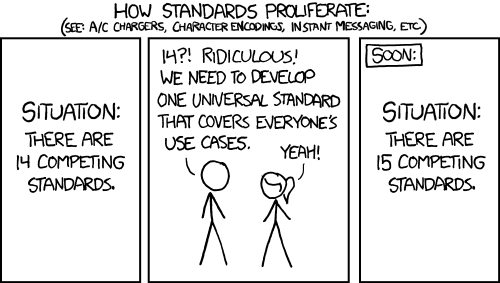
When you say "Test" which definition are you using?  The Bachian 2014 definition.  Oh, you've not moved on to the 2015 definition?  No, it's out now?

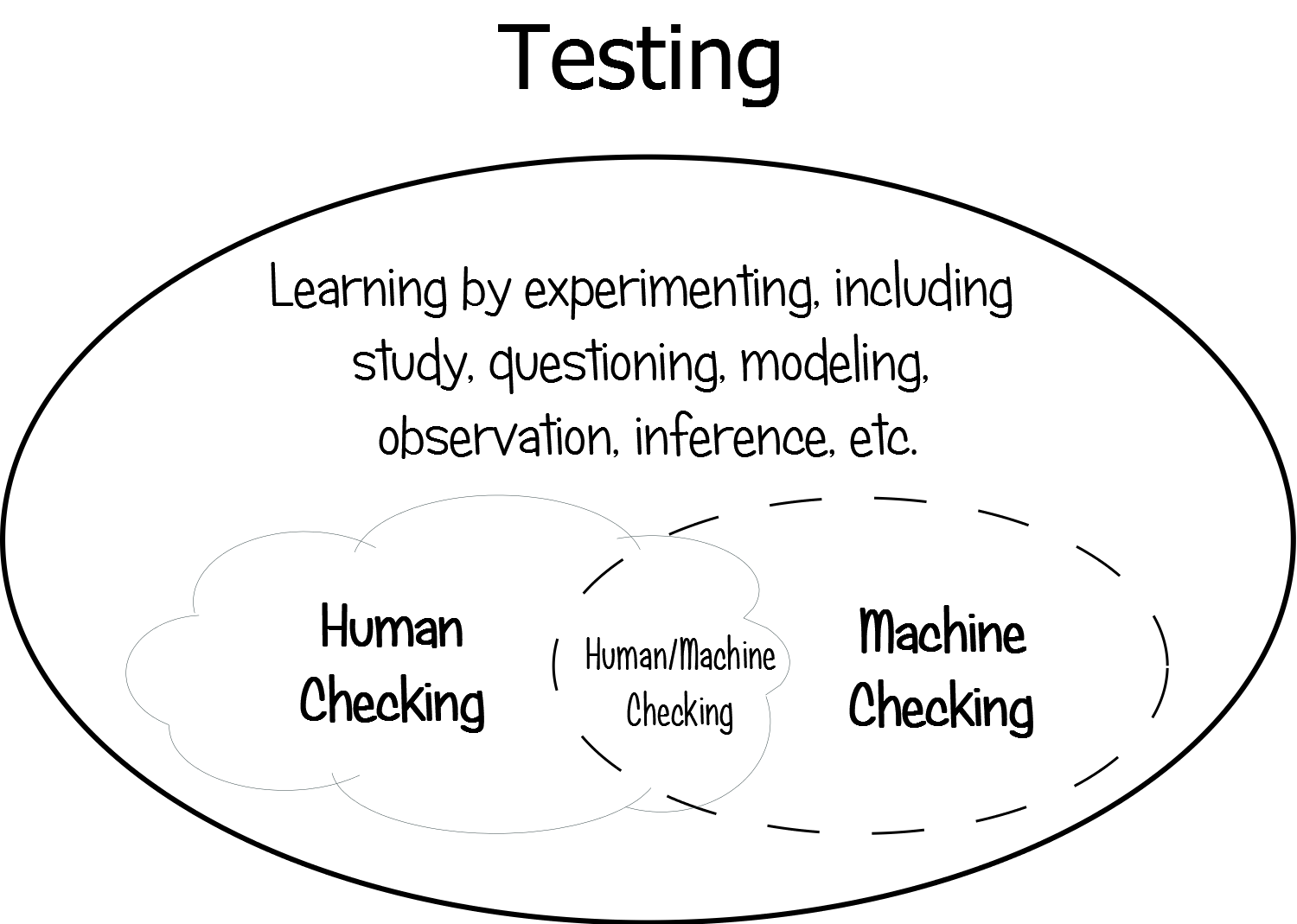
Back to the question of computers and if they can go beyond humans in testing/checking.  I take it that Bach feels that computer's ability to test/check cannot go beyond people from this graphic:


Machine Checking is inside Testing and James Bach defines Testing as:
Testing is the process of evaluating a product by learning about it through exploration and experimentation, which includes to some degree: questioning, study, modeling, observation, inference, etc. 
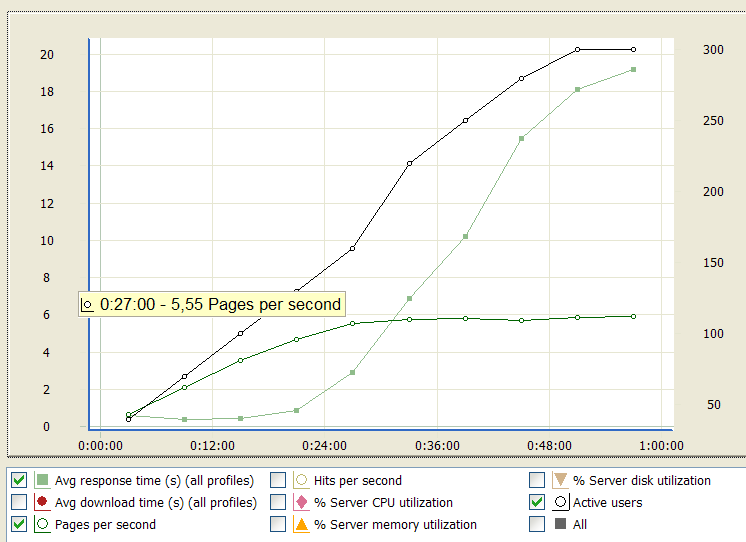
So if you run a load test, the load that the machine generates allows you to observe the system under load, using machine generated metrics like page load times or database CPU usage. The question is where does the load test code belong?  Is it 'checking' in that it navigates the pages?  I suppose it does blow up if it can't load the page, which is a check, but the primary point of load tests is not about the functions of the page as much as the non-functional requirements. Is the data gathered by the load test a model?  If I have a graph of users to page load times, isn't that a model... created by a machine?  Bach does not seem to have a reply to this, other than to say that a machine embodies its script and thus is separate from humans. Whittaker on the other hand does not care as much about the distinction as he does about getting the technology good enough to get the data into engineers hands without a middleman tester writing a specialized load test script. Better yet, in Whittaker's mind, get your users to do the testing by deploying the code.


Another issue is that while the test executes, it is limited to the data and code written, even if you have a genetic algorithm for testing and use Google as a datasource.  These are powerful algorithms and Google as a datasource outmatches my own knowledge base in a sense. While I agree this is perhaps different than a human who is perhaps in some way more advanced than said algorithms, it can also be beyond human.  Perhaps because humans can reason and the algorithms are limited to the code written there is a distinction to be made, which is fair enough, even if I still am not 100% convinced.  Is reasoning just another term for 'a process we don't fully understand' while code is something we can?  Is 'tacit knowledge' and 'cultural understand' really limited to just humans or will computers with enough data be able to generate similar models some day?  I admit human brains seem different, maybe we have a soul, maybe we have free will, maybe....  But to be fair, even with my imagined super-advanced testing system, I know 98% of automated testing systems are not attempting to approach these sorts of advancements.  Even if our automation systems aren't nearly as good as I think they can be, does that mean that testing vs checking will always be a dichotomy or will programs eventually get good enough that we can't tell the difference?  And what if humans are always special and better, what about diminishing returns? Hand-washed clothing maybe cleaner and possibly more water efficient, but a washing machine is preferred by nearly everyone in the modern world.  Perhaps all of this doesn't matter right now, but Dr. Whittaker seems to think we're there.  Maybe places like Microsoft are there?  Maybe "Tester" as a role makes less sense as more of that role is automated away, and maybe when you throw enough developers to create the automation, you can have most of your testing automated?

So then there is another question that comes to mind, if executing a "automated test" is checking, while the human is writing the algorithm to do the 'checking', is that testing?  In speaking with Bach, it is not in his mind.  My brain, thinking about the problem, writing code, creating models in my head about the system under 'test' (system under check?) is not testing according to Bach.  Very interesting viewpoint, making my claim of about this site being 98% about testing untrue in Bach's viewpoint.  Dr. Whittaker would seem to say that of course that is testing, even if I personally shouldn't be doing it or at least I should also be writing production code.

To be fair, Dr. Whittaker also argues that users are better than machines or testers.  This is a point both Whittaker and Bach might agree on, even if Bach might say only in some context.  But, in saying that I think Dr. Whittaker loses the point that users of a product can change products quickly and are fickle.  The mighty IE 6 failed and clearly IE is no longer top dog.  Listening to users might have been part of that, but an insider advocating for the users also might have been helpful! Users often don't know what they want and what they want changes quickly. This has known this for years. What makes Dr. Whittaker think that all products have a single user base that only wants one set of features? One man's bug is another man's feature.  For that matter, what about products that don't have a exploitable user base?  How do you dog food software for shipping products (OMS) when it costs money every minute the software is broken?  How about we dog food a pace maker; that will work, right?  James Bach would note that quality is not a thing you can build into software but rather a sort of relationship.  I suspect that if you break the software too often, you harm the user's interest in that software and they will move on.

What can I see from here?


I very much appreciate that these giants of the industry allow me to stand on their shoulders and look out upon the sea of possibilities.  I don't know exactly where I stand in an 'official' sense, but I am sure that both of them hold good ideas, ideas that should be investigated... nay, should be tested.  To his credit, James Bach agrees and wants to continue to make his ideas better.  The problem is that with different context there are different needs.  I have pondered from time to time if we could lock down context (e.g. E-Commerce website, X-Y income, X-Y products sold, Z types of browsers), could we say something about which style of testing would make more sense?  In considering both arguments, I have to say that in my experience, automation can go beyond what a human can test, but the value provided often is different than that provided by manual testing.  On the other hand, often the results require human analysis, meaning that human judgment is still required. Like a load test that knocks over a system after throwing 500% of normal load, a human is required to do the analysis and render a value judgment.  I having also seen some development shops that have gone without testers. At least in one case, they seemed to have almost pulled it off in a superficial view, but once you dig in, I think it became clear that some people or places do need testers.  I don't think there is a way of giving detailed advice that is universal, and without some well controlled studies, it maybe impossible to tell when a particular methodology is superior in a given context.

While I can't speak to what method is the best or which are superior to others, I can speak to what worked and what didn't for me in my context. Using only my own contexts and what I have seen I can make a few broad statements.  Few people do automation well.  The most successful automation does not involve a UI or when it does, it is in a manumated process. Those who do automation well are treasures.  Few, but more people do manual testing well.  These people are also treasures.  If you have only bench testing by the developers, adding either automated or manual testing (or checking) is likely to increase the quality for the product in small to medium size organizations.  I am not sure how to logically organize test/development for large organizations (more than 500 people in software development).

Not everything is easy to be tested by code.  Not everything is easy to test by people.  If you can't get people to do the testing, either it might not matter enough or you should automate it and accept the limits of checking.  If your automation keeps breaking either your software is flaky or perhaps it shouldn't be automating (yet, if ever).  Testing is hard and you need people who understand testing, be they developers or testers.  For that matter, you also need people to understand software development, the business, the customers and probably the accounting.  How you label these people may affect how they do the job, and maybe it matters, but what matters most is that the job is done as much as it needs to be done.

Ultimately, software development is hard.  Dr. Whittaker and James Bach come at the problems from very different places, but both want to improve the quality of software.  Even with their extremely different views both have contributed towards their goals.  These extremes do cause some polarization and sadly this post might sound negative towards both their views, but it is hard to find common ground between two extreme views. On the other hand, Whittaker helped make Visual Studio 2008 and 2010 better at testing while Bach has been working on perfecting RST!  Both these men have worked towards their visions and have created useful artifacts from their near disparate visions. While I have disagreements with both sides, I am glad they were around making my job of testing better and easier.

So if I haven't said it yet, thank you.

One last thing.  If Dr. James Whittaker or James Bach respond to this with any corrections, I will update this post.  I maybe challenging my understanding of their ideas but I am not trying to put words in their mouths.

Tuesday, November 4, 2014

Consultant's War

My co-contributor Isaac has been pondering the fact that we see more consultants blogging regularly, speaking their mind and controlling the things we talk about.  I don't care if it is  Dorathy "Dot" Graham, Markus Gärtner, Matt Heusser,  Michael Bolton, Michael Larsen (Correction: As Matt pointed out, I got my facts mixed up and Micheal is not a consultant), Karen Nicole Johnson,  James Bach or Rex Black.  There are dozens of consultants I could have listed (I mean, how could I have missed Doug Hoffman!), some of whom I have personally worked with.  So this is not meant to be a personal attack on any of them.  I realize I list more CDT folk than others, and while that is not intentional, I read less of the thought leaders from the other schools.  If you look, I bet most of the people you read either are or were consultants [In interest of full disclosure, I have written a hand full of articles and have been paid, but I am not nor have I ever been a consultant, and with you reading this, it is at least one counter-argument, but we'll get to that in a bit.].  If you made it here, there is little doubt you've read at least of those author's works at least once.  They are stars!  I mean that literally.  I found this image of James Bach just by searching his name:
From: http://qainsight.net/2008/04/08/james-bach-the-qa-hero/
I didn't even use image search to find that, it came up on the first main page of my Google search results!  I respect James, he writes well and has interesting ideas, but I have no opinion on his actual testing skills, as using his own measure, I have not seen him perform.  Keeping that in mind, I have not seen any of the above consultants do any extended performances in testing, even if I have listened to many of them talk and gained insights from them.  They know how to communicate and they are often awesome writers.  Much better than I am.  They all are senior in the sense that they have done testing for years.  Some of them disagree with others, making it often a judgment call of their written works on who to listen to.  Some of it is the author's voice.  In my opinion, Karen Johnson is a much softer and gentler voice than James Bach.  But some of it is factual.  I have documented several debates between Rex Black and various other people I have listed.  Rex has substantially different ideas on how the world should work regarding testing.

 ISO 29119


James Christie, another consultant brought up a standards in CAST 2014.  It was a good talk and clearly he had some valid concerns about the standards that have been created.  I have talked about that earlier (I am not going to include as many 'justifying' links as all my points and links are in the earlier article).  I am actually not terribly interested in the arguments and in reality, ISO 29119 is more of a placeholder than the actual point of interest.  I am more interested in discussing who is creating these debates.  In part we are in a war between consultants and in part we are in a war of 'bed making'. Clearly the loudest voices are from those who have free time and have money at stake. The pro-ISO side has take the stance of doing as little communication as possible, because it is hard to have a debate when one side won't talk. It is a tactical choice, and it is very difficult to compromise when one side doesn't speak. Particularly when the standard is already in place, the pro-standards side doesn't have much to gain from the messy-bed side who wants the standard withdrawn.

Both groups of consultants have money to gain from it.  A defacto-RST-standard would make Bach a richer man that he already is.  Matt Heusser's LST does give at least some competition of ideas, but still that isn't much more diversity. The standards would probably make the pro-standards consultants more money as they can say, "as the creator of the standard I know how to implement it."  Even if they made no more money in so far as making the standard, they will be better known for having made the standard. Even if I assume that no one was doing this out of self-interest, the people best represented are the consultants and to a lesser degree, the academics, not the practitioners who may feel the most impact.  Those leading the charge both for and against the standard are primarily consultants or recent ex-consultants. Clearly this is a war for which the people with the most time are waging, and those are the consultants. Ask yourself, of those you have heard debate the issue, what percentage are just working for a company?

Granted, I am not a consultant, but it takes a LOT of effort to write these posts.  It isn't marketing for me, except possibly for future job hunting, and the hope that I will help other people in the profession.  I know non-consultants are talking about it, but we don't have a lot of champions who aren't consultants.  Maybe most senior level testers become consultants, perhaps due to disillusionment of testing at their companies.  Maybe that is why consultants fight so bitterly hard for and against things like standards.  Perhaps my assertion that money at the table is a part of it is just idle speculation not really fit for print.  I can honestly believe it to be that is possibly the large majority of the consultants involved.

 Bed: Do you make yours?


Then what is it that causes these differences of view?  Well let me go back to the bed making.  To quote Steve Yegge:
I had a high school English teacher who, on the last day of the semester, much to everyone's surprise, claimed she should tell just by looking at each of us whether we're a slob or a neat-freak. She also claimed (and I think I agree with this) that the dividing line between slob and neat-freak, the sure-fire indicator, is whether you make your bed each morning. Then she pointed at each each of us in turn and announced "slob" or "neat-freak". Everyone agreed she had us pegged. (And most of us were slobs. Making beds is for chumps.)
That seems like a pretty good heuristic and I think it is also a good analogy.  Often those who want more documentation, with things well understood before starting the work and more feeling of being in control via documentation are those who feel standards are a good idea.  They want their metaphorical beds made.  They like having lots of details written down, they like check lists and would rather make the bed than have a ‘mess’ left all day. A nice neat made bed feels good to them. Then there are the people who see that neat bed and think it is a waste of time at best. At worst, they think that someone will start making them make their bed too. Personally, I think "Making beds is for chumps", just like Steve Yegge. Jeff Atwood would go even further and call it a religious viewpoint:
But software development is, and has always been, a religion. We band together into groups of people who believe the same things, with very little basis for proving any of those beliefs. Java versus .NET. Microsoft versus Google. Static languages versus Dynamic languages. We may kid ourselves into believing we're "computer scientists", but when was the last time you used a hypothesis and a control to prove anything? We're too busy solving customer problems in the chosen tool, unbeliever!
Clearly the consultants, many of whom I take valuable bits of data from care about what they do and they tried to lock down their empirical knowledge into demonstrable truths.   But that doesn't mean they have 'the truth'. I know as testers we try to have controls, but I am not so convinced we have testing down to a science.  It is why I feel we aren't ready for standards, but I also recognize the limits of my own knowledge.

For what it is worth, I tend to be against bed making, I think having all this formal work and making checklists is rather pointless unless they fit what I am doing. Having one checklist to rule them all with a disclaimer that YMMV and do the bits you want doesn’t sound much like a standard, but those whom like their bed nice and neat probably feel very happy when they come home at night. The ‘truth’ about the value of making your bed, the evidence that it is better is less than clear. Maybe one day we will have solid evidence in a particular area that a particular method is better than another, but we aren’t there yet in my opinion. But still I don’t make my bed.  In case you are wondering, I think this is probably one of the hardest questions we have in the industry:  What methods work best given a particular context and what parts of the context matter most?